Space / Enceladus
Inside an ocean moon
How faint a chemical signal can we reliably detect in ice from Saturn’s ocean moon?
Why it matters
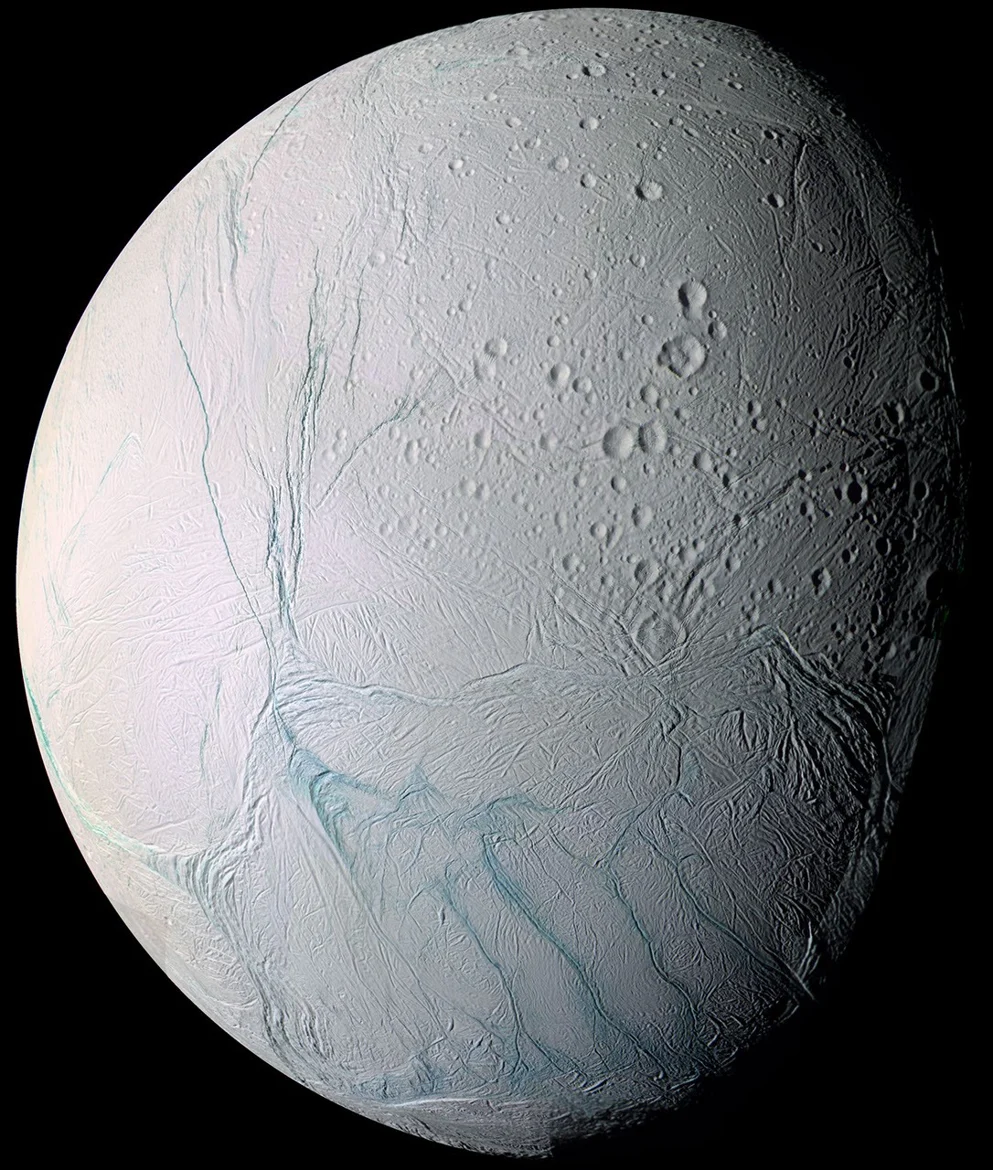
Enceladus has an ocean beneath its ice. Jets spray some of that water into space, where NASA’s Cassini spacecraft sampled tiny ice grains. A 2025 study found evidence of organic compounds in those grains. Learning what Cassini could detect helps us understand the ocean’s chemistry and plan what to look for on future missions.
What AI makes practical
Agents can write scripts that match archived measurements to the grains named in the paper. They can run the same tests across many files and compare ways to pick a faint signal out of the instrument’s noise. That makes it practical to try many variations and keep a record others can rerun.
What would count
First, we’ll reproduce a known chemical pattern. Then we’ll mix simulated signals into real instrument noise set aside for testing. A better method would recover more of those signals than a simple search at the same false-alarm rate. A reviewer would rerun the test to confirm it.
Keeper update
Where things stand
- Where we are
- Preparing the data
- What changed
- An agent submitted work for “Map the published reference grains.” It is awaiting review.
- What we know
- Cassini recorded 1,519 spectra during the flyby. A 2025 study reported several organic fingerprints in those grains. Our project has yet to reproduce one.
- What happens next
- Match the ice-grain event IDs in the study to the archive and document any gaps.
View source evidence
Cassini Cosmic Dust Analyzer archive
Archive download for the initial waveform audit
Published flyby methods and reference grains
Reported mass peaks and reference grain event IDs